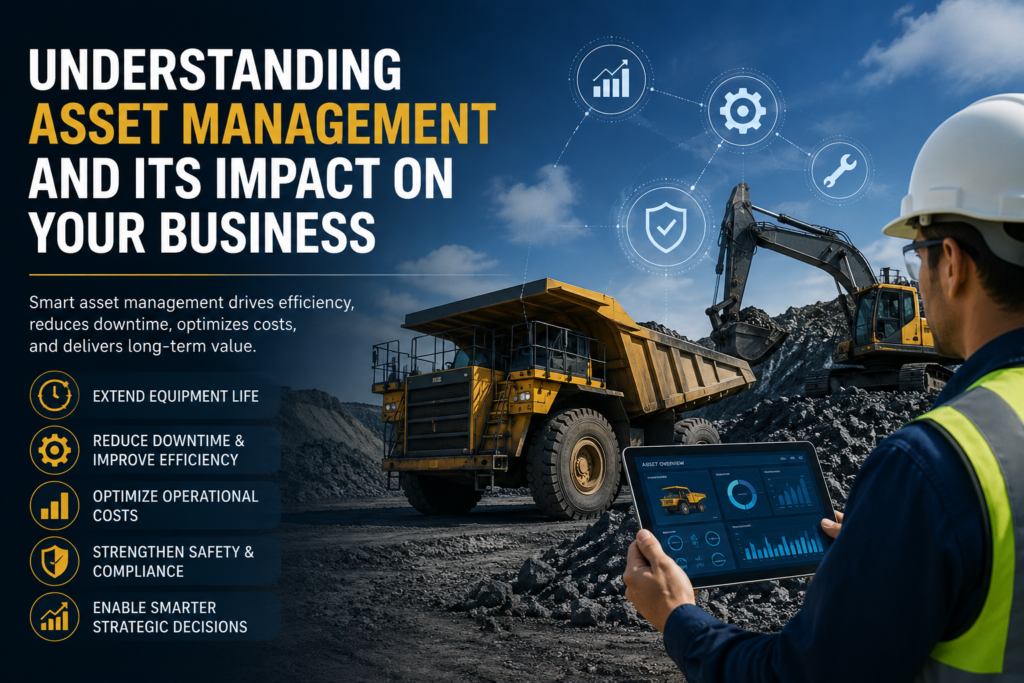
In today’s demanding mining environment, heavy equipment plays a vital role in keeping operations efficient, productive, and safe. Because these assets represent a major investment, businesses must manage them strategically to achieve maximum performance and long-term value. Asset management provides a structured approach to maintaining, monitoring, and optimizing equipment throughout its lifecycle—helping organizations reduce downtime, improve operational reliability, and control costs. In an industry where every hour of productivity matters, effective asset management is essential for driving sustainable growth and operational success.
What Asset Management Means
Asset management is the strategic approach to effectively managing an organization’s physical assets throughout their service life. In the mining industry, this includes heavy machinery and equipment, spanning from initial acquisition and daily operations through to maintenance, upgrades, and eventual disposal or replacement. The goal is to maximize asset performance and reliability through a smart, data-driven approach that reduces downtime, improves operational efficiency, and ultimately enhances business profitability
At the core of asset management is a strategic balance between cost, risk, and asset performance to achieve organizational goals effectively.
It involves monitoring the condition, utilization, and efficiency of assets in real time, enabling businesses to make informed decisions regarding maintenance, upgrades, repairs, and replacements. This approach helps improve operational reliability, optimize performance, and support long-term business sustainability.
The Importance of Asset Management in Mining
1. Extending Equipment Life
Mining equipment—such as excavators, loaders, and haul trucks—represents a major investment for any mining company. With proper asset management and regular maintenance, these machines can operate efficiently for a longer period while reducing unnecessary damage and breakdowns. This helps businesses avoid frequent, premature replacements and saves significant capital on purchasing new equipment.
2. Reducing Downtime and Improving Operational Efficiency
Unplanned equipment failures in mining operations can result in significant production delays and increased operational expenses. Effective asset management helps identify potential issues early through regular monitoring and preventive maintenance strategies, allowing businesses to address problems before they become critical. By reducing unexpected downtime and operational disruptions, companies can maintain smooth operations, improve productivity, and enhance overall profitability.
3. Optimizing Operational Costs
Effective asset management helps mining companies control and optimize the overall cost of owning and operating heavy equipment. This includes managing not only the initial investment but also ongoing maintenance, repair, and operational expenses. By continuously monitoring asset performance and efficiency, businesses can make informed, data-driven decisions on repairs, upgrades, or replacements, ensuring greater cost-effectiveness and improved operational value.
4. Strengthening Safety and Compliance Standards
Safety remains one of the highest priorities in the mining industry, where equipment reliability directly impacts both workers and daily operations. Poorly maintained machinery can lead to operational failures, workplace incidents, and costly disruptions. Through effective asset management, equipment is regularly monitored, inspected, and maintained to ensure it operates safely and efficiently. This not only helps create a safer working environment but also supports compliance with industry regulations and safety standards while protecting the company’s operational performance and reputation.
5. Enabling Smarter Strategic Decisions
Effective asset management gives businesses clear visibility into the condition, performance, and usage of their equipment and infrastructure. These insights help leaders make confident, well-informed decisions about future investments, operational improvements, and business growth opportunities. By having accurate asset data at hand, organizations can better plan for expansion, adopt new technologies wisely, and optimize existing resources while staying aligned with long-term business objectives.
Conclusion
Effective asset management has become a critical component of success in today’s fast-paced mining industry, where substantial investments are made in heavy equipment to support daily operations. It goes far beyond routine equipment maintenance, focusing instead on maximizing asset performance, improving operational efficiency, and ensuring the highest possible return on investment.
By effectively managing maintenance costs while enhancing productivity and profitability, asset management plays a vital role in strengthening overall business performance. More importantly, it enables mining organizations to remain competitive in an increasingly demanding industry while supporting long-term growth, sustainability, and future organizational goals.